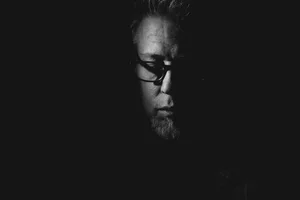
Landscapes, Shadows.
“For whatever reason, I take fewer photos now than I did pre-pandemic, and the ones I do take are somewhat inscrutable. I don’t even think to do it when I’m socializing. What I do seem to take are snapshots of where I am in quiet moments, even if the locations aren’t photogenic. Most aren’t really meant to be shared... They’re meant, instead, to add texture to that near-infinite scroll of the camera roll. They’re meant, probably, as proof that I’m alive and in the world.
”
That quote is from Confessions of a Digital Hoarder , by Charlie Warzel. It was a link in These Traces (issue 059), so you may have read it already, but I never expanded on the subject. It's a thought-provoking piece. What begins as an examination of our relationship with digital data, transforms into a deeper reflection on the nature of memory, and the effects of "delegating" knowledge to external devices. It covers a lot of ground and offers a lot of insights, but I'm most interested in the author's personal connections with photography.
Much of what he describes—this blurring of meaning—eerily aligns with my own experiences. Documenting our family's daily life through photography has turned into a somewhat amorphous object, and one I struggle to define: is this an evolution, or a symptom?
Until recently I’d chalked it up to our kids getting older, to an increasing "modesty" of my gaze, meant to provide them with the space they deserve. But I now wonder if there isn't something else at work, because the reflex extends to more than my immediate surroundings. I’m less and less interested in street photography, for instance. And there's a number of reasons for that:
It's an external subject, when my current impulse is to turn inwards.
Pointing my camera at strangers now feels disconnected, almost obscenely pointless.
I perceive it as decor, a facade without real substance—because its truth remains unknown.
Why do I feel this way? Why am I no longer pulled towards the theatre and pageantry of humanity?
Because humanity doesn't want me there. I've been beaten into submission by privacy laws, by the notion of consent, and a pervasive climate of everything and everyone being out of bounds. Even with friends I've become reluctant to pick up my camera (unless they're photographers as well). We've been made to feel like invaders, like aggressors, and despite all my rants and willingness to fight, it's taken it's toll. That definition now permeates my consciousness, and there's nothing I can do about it because the reminders are constant. Just last week I heard about a proposed law being debated in France, to protect children's right to privacy—in the context of image sharing. Which is of course perfectly legitimate.
But as I listened to the report, I eventually began to question my work: all those posts I've written, all those pictures I've shot, the essays... did I mess up? Am I one of those parents who used his kids? Did I go too far? Nothing I shared was ever calculated, and yet it made me feel what I'd never felt before: shame.
When did photography turn into such a guilt-ridden pursuit?
…
The last article I wrote for (the now sadly defunct) Photo Life magazine, was called Rise of the Shadow World. In it I was addressing many of the legal issues and challenges surrounding photography as a whole (with help from my buddies at KAGE). It was published in December 2019, just a few months before lockdowns, but for me the slide had clearly already begun:
But even as I sit here decrying the ruling and its slippery slope, even as I try to dismiss the glares that randomly surface during photo outings...I’m forced to acknowledge that I’ve been affected by the climate all of these elements, together, have created. The effect has been pernicious, growing over time, but it’s unmistakable: my street images are less and less populated. When they are, they tend to force anonymity through obfuscation—faces in shadows, backs to the camera, motion blurs. I’ve taken to abstraction over narrative, to dwellings over their inhabitants. And I have to question the value these images will hold, beyond aesthetics, for future generations.
... being considered suspect by others has unconsciously changed my approach: I now see myself as suspect as well. And I shoot that way.


...
Beyond this landscape, I can't shake the sense that the pandemic may have altered many of us at some deeper, psychological level too—just by filling us with an acute awareness of our actual place in this world. Of how small and fleeting we are. Maybe this desire for abstraction, and contemplation, is a reaction to futility. An acceptance of our slow migration towards the ghosts we're destined to be, through a deliberate diffusion of reality. An embrace of soulful shadows on the walls of our cave.
Perhaps anonymity is our ultimate truth and expression.
Perhaps we're only meant to be texture, whizzing by in an infinite scroll.