The cab, the Moment and the Why
A quick return to the images from Flexing & the Family in the Cab.
It was mentioned in the comments that my processing on this story seemed less aggressive than usual. “Usual” as in the past two-three years, I’m guessing. I found that interesting. I can tell you it wasn’t planned (not exactly), which begs the question: why?
I’ve been thinking about it these past couple of days, and I believe there are a few likely culprits:
The X100F: shooting with this camera, set to Classic Chrome, in Downtown Montreal, immediately brings me back to different times. I’m sure it influenced the results.
The context: home has become predictable, the street never is. More on this in a bit.
Raw: the camera was set to shoot raw-only. It’s a recent departure from the way I’ve always worked, and this obviously was a conscious decision on my part.
A word about raw
I listened to a Zane Lowe interview with Brian Eno last week, following the release of his new album FOREVERANDEVERNOMORE (which I’m very much into currently). He discussed his need for re-invention, and how we’re often pressured into repeating ourselves, because of who others expect us to be. It’s a form of self-typecasting, in a way, exacerbated by our (very human) desire to please. What’s crazy is that I’ve been hearing or reading this same message, in one form or another, for months. In fiction and non-fiction, articles, blog posts, quotes, movies…everywhere. It’s a bright red, blinking light on my dashboard at this point: STOP. CHANGE. NOW.
But I don’t believe in signs. I think we just notice what our mind secretly requires us to notice, when we’re ready, and due for action. It’s up to us to either listen or turn away.
Shooting raw isn’t a renunciation of JPEG. But it’s definitely a form of mild rebellion, an attempt at breaking the box I may have unconsciously trapped myself into, either through habit, or laziness, or maybe to preserve some meta guy-who-shoots-JPEG version of myself. Cue the therapy sessions. Bottom line: I’m craving shock, and this is a quick way to bring disruption. Sort of. At least to reroute some of my mechanical pathways.
The colours of home
The second point (about context) is obscure, but it may also hold a key. I accepted, years ago, that my immediate surroundings would remain a perpetual source of visual inspiration; that I would always force myself to look beyond the familiar. That I’d “forget knowing”, as Bachelard explains it:
“Knowing must therefore be accompanied by an equal capacity to forget knowing. Non-knowing is not a form of ignorance but a difficult transcendence of knowledge.”
The search for subject in photography is, at times, overwhelming. Because our camera, on its own, is an empty vessel. Our craft exists through outside input—through others, through events, through objects. We’re completely dependent on whatever proposition is offered to us, at any given time. So this transcendence of knowledge is crucial: it expands our canvas by transforming anything into a possible subject for re-interpretation.
Fine. But we’ve now lived in this house for over twenty years. The space has evolved, the rooms have changed, and we’ve changed with them. Still, all this time, compounded by the isolation of the pandemic years…it’s a lot of knowledge to forget, of familiarity to un-see. I think the increasingly intensifying processing of these past years probably stems from a need to obfuscate certain subjects, specifically; all this stuff I now know too much. This house, our neighbourhood, the rooms, the furniture, the light and shadows and details and reflections… I’ve seen and captured them a million times already.
That family in the back seat of a cab, however…they were new. Unknown, unexpected, and fleeting, trapped in a movement on the cusp of extinction, like all other actors in the scene, going about their day.
Everything about this moment begging to exist as it was, without artifice.
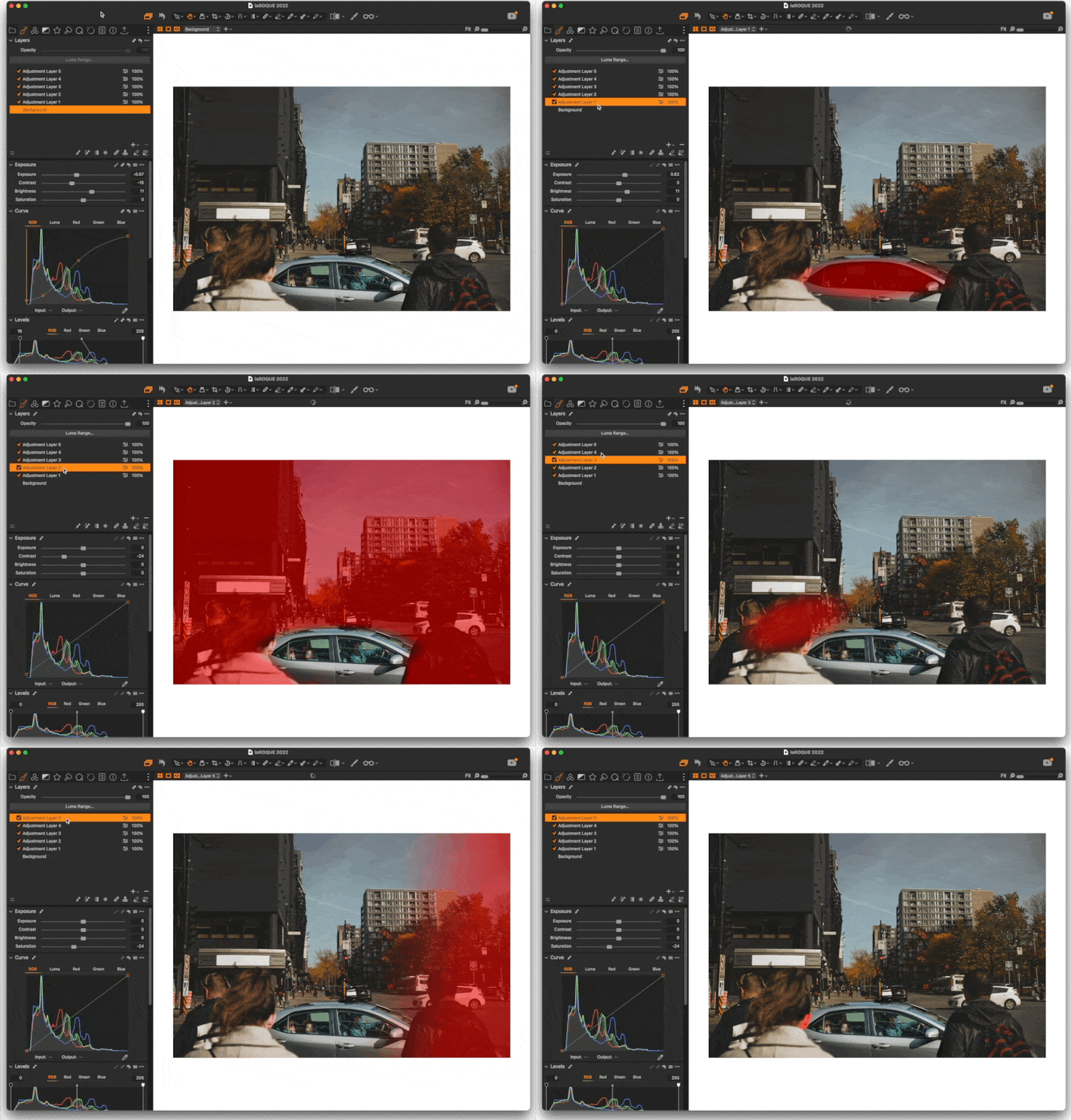
That said, the following before and after shots reveal quite a few processing decisions in terms of toning, and refocussing of the viewer’s eye. But the aim might be more about clarity than abstraction:


In case you’re curious, there are in fact five adjustment layers in total. Here’s a quick look (it’s a GIF…let it load if it hasn’t):
Realizing
This reflection is all post-Dawson shoot (even that Eno interview I mentioned). I’m putting words to thoughts that have been brewing for a while, some that I’ve expressed before, but that still weren’t perfectly clear when I left on that Sunday morning. Just clear enough to switch camera settings.
Will any of this lead somewhere meaningful? I honestly don’t know. But it does begin to define The Why.