Fujifilm GFX 100RF: The Impossible Promise
The first time I heard about a potential medium format camera from Fujifilm was during a small, all-day meeting in New York City, in 2014. Three years or so later I was at the unveiling of the GFX 50s in Germany. I still remember David Hobby's reaction when he first picked up the camera, a few of us looking on, everyone assembled in the photographer's lounge at Photokina: "Oh my god...this is crazy! "
I'd met David at that meeting in New York, and we were now witnessing hopes made real, an almost surreal transition from possibility to usable object.
But we hadn't seen anything yet.


The GFX 100RF feels like my X-Pro2. Let that sink in for a moment. Yes, it's a bit taller (that 102MP MF sensor needs somewhere to go), but the built-in lens design compensates for any added height. This is an incredibly light, well-balanced, and ready-to-go system. Here's a side by side shot of those two cameras, just for kicks:

X-Pro2 vs GFX100 RF

One hand…!
The other, probably even more obvious comparison: this is essentially a medium-format X100. That built-in lens isn't just mimicry: like all X100 cameras the GFX 100RF features a LEAF shutter, along with a built-in switchable 4-Stop ND filter. If you're a flash shooter you likely understand what this means: no sync limitations and a whole lot of control over ambient light.
New Controls
The GFX 100RF is an uncompromisingly physical camera: there's an aperture ring, along with dedicated shutter, ISO, and exposure compensation dials (plus the usual front/rear dials, and multiple fn buttons—all customizable). But the GFX 100RF also introduces brand new hardware controls:
The Aspect Ratio Dial that sits on top of the camera.
The Digital Teleconverter Lever at the front. (1)
The Surround View, a reengineering of the EVF/OVF lever found on the X-Pro and X100 cameras.


Now, we can debate the actual usefulness of the Aspect Ratio Dial (I personally rarely need to quickly change this setting between shots), but it IS fun and yes, fun matters. The dial reminds me of the "film" display at the back of the X-Pro3—mostly unnecessary, but definitely whimsical. The sort of design flourish that turns an object into more than its functions and adds character. But in this case, the design choice actually goes way beyond cosmetics.


New Crops
Both controls—the Aspect Ratio Dial and the Digital Teleconverter Lever—lean into a clear and intentional embrace of cropping as a feature of the GFX 100RF. And I think it makes total sense: anyone who needs the full resolution will know to stick with the native 28mm equivalent at 4:3. But, in most cases, 102MP is likely to be overkill. Presenting the sensor as "a whole lot of overhead to play with" moves the needle from resolution, to versatility. From technical, to creative. In addition to the many aspect ratios available (which now include 17:6 and 3:4 vertical), the camera also offers crops that mimic specific focal lengths: 45 (36mm), 63 (50mm), and 80 (63mm). Obviously, cropping means a loss of image resolution... but this is on a 102MP medium-format capture. The 3:4 vertical still yields a ~40MP file. The 80mm "focal length" clocks around 24MP. And in each case we're still getting the resolving power of a GFX sensor, which means tons of detail and definition.


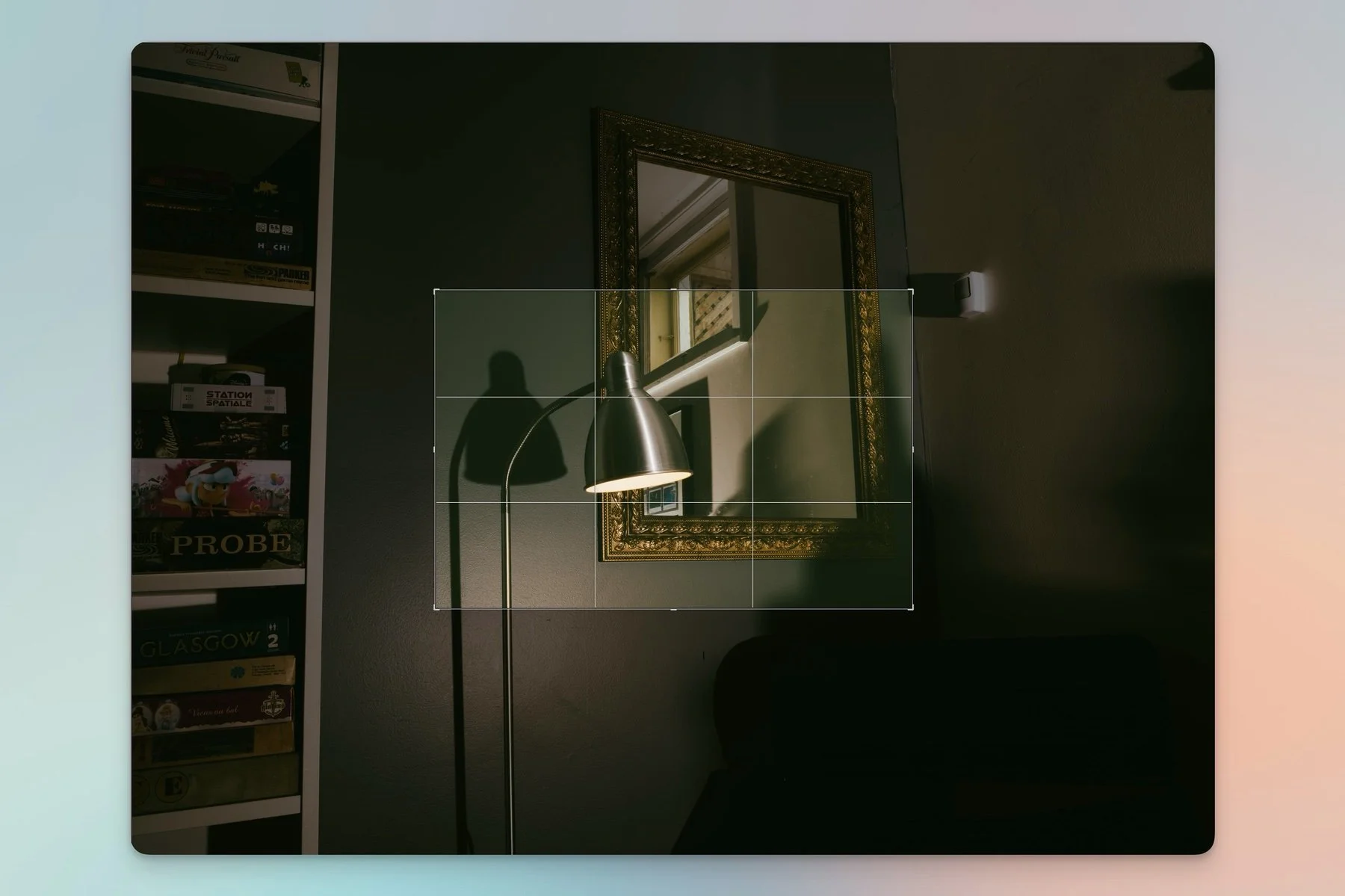
Full resolution raw file in Lightroom—shot in 3:2 at 80 (63mm)
If you shoot raw nothing is actually lost: you'll see the cropped image in-camera but still retain access to the full resolution in post. When shooting JPEG, however, that crop is destructive. Something to be aware of. The crops can be displayed in two ways: as framing outlines on top of the full resolution image (similar to the X100 lines in the optical viewfinder); or "zoomed in", as the image would actually appear at the corresponding FOV. Toggling from one to the other is an easy flip of the DTL switch.
I've said this before: I have a quirk that makes me biologically averse to any sort of aggressive cropping. It always feels like a cheat on top of a technical cop-out. And yet I found myself playing with these "focal lengths" with little remorse (1). Just as I've never had any guilt about using the 65:24 aspect ratio on my GFX 50S—something about cropping in-camera feels more legit, for some reason. It's about seeing the moment within that particular frame as opposed to changing your mind in post.


Equivalencies
That said, I had to know. Here I was, with a pre-production GFX 100RF in one hand and a GFX 50s + GF63MM in the other. I couldn't NOT test this, right? Here are two images, both shot on tripod using the exact same settings, with the RF set to a 63 crop. The "real" 63mm lens is also set at f4, which is the fastest available aperture on the RF:


That's the GFX 100RF + crop on the left, the GFX 50s on the right. Close, right? But not the same. And FYI, I re-positioned the tripod between shots to compensate for the change in distance due to the shorter lens throw of the RF—there's no additional cropping in post. I find these results really interesting: it comes down to the inherent character of each lens, but also to the physical differences between actual focal lengths.
This is not a diss against the GFX 100RF—not at all. But I needed to see this for my own personal curiosity, and I also think it's an important consideration for any current GFX owners who might be evaluating this camera as an all-in-one replacement to their current system. It is absolutely possible. In fact, depending on the type of photography and work that you do, it might be downright exciting and the right call to make. But it will involve a few compromises, as most things in life do.


Forward
It was clear to me, from the very first seconds of holding the camera, that we'd crossed an important threshold. There was even a moment, a few days later, when I thought I'd picked up my X-Pro2 by mistake. Just a very brief flash of uncertainty but still, to quote David Hobby "this is crazy". Does it fit in your back-pocket? No. But my goodness what a machine. The GFX 100RF is medium format at a scale I never imagined.
An impossible promise, delivered.
P.S For the full details check out Fujifilm-X.com
1: I did default to raw though. I still need to work on myself...