Shuhari
Or Imitation, Assimilation, Innovation.
I’m forever surprised by Japanese culture’s ability to distill complex, abstract ideas, into simple, concrete, often surprisingly precise constructs. Not simple in the sense of “easy to achieve”, but in terms of comprehension— expressing frameworks where none existed.
Shuhari is a method of learning derived from Aikido, so you may already have heard of it. But I discovered this only recently, through an article on the Readwise blog written by Daniel Doyon, one of the service’s founders:
"It is known that, when we learn or train in something, we pass through the stages of shu, ha, and ri. These stages are explained as follows. In shu, we repeat the forms and discipline ourselves so that our bodies absorb the forms that our forebears created. We remain faithful to these forms with no deviation. Next, in the stage of ha, once we have disciplined ourselves to acquire the forms and movements, we make innovations. In this process the forms may be broken and discarded. Finally, in ri, we completely depart from the forms, open the door to creative technique, and arrive in a place where we act in accordance with what our heart/mind desires, unhindered while not overstepping laws." Adding Intention to Spaced Repetition, Daniel Doyon.
Learning, of course, is a deeply personal process, but there are necessary stages, steps we all follow, even unknowingly. I was struck by the intense clarity of the shuhari method, and how closely it aligns with my own experiences throughout the years, in many areas.
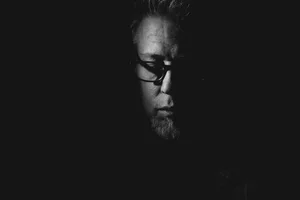
I also quickly made a connection to the creative process, and to photography specifically: could we apply this in our approach to subject matter? Could we deconstruct visual comprehension by following the same pattern?
According to one Wikipedia entry, shuhari translates to "to keep, to fall, to break away". Other sources offer slightly different meanings: protect, detach, and leave, or obey, digress, and separate. As you can tell, they’re all variations on a theme. But when I consider any of those words, to my mind they represent the three choices we face every time we capture a scene, an individual, an object, or a moment:
SHU: the subject as it is, as it exists.
HA: the subject is abstracted, still present, but not as precise.
RI: the subject becomes a pretext, either fully disconnected from or transcending its reality.
RI would be a re-interpretation of what we see, on our terms, unconstrained by objective truth. On a personal note, I think most of my recent work falls under RI. It’s almost as if I now rarely wish to see reality—probably an attempt at control, at a time when life feels increasingly uncontrollable.
Consider these thoughts a brainstorm.