Dissection 012
a tale of alternate timelines
Original essay: Device Light: a Sequence
Visual stories are rarely linear. Just like film editing, it’s up to us to figure out a frame order that will best translate the message we’re trying to convey. There are multiple ways to do this: sometimes a narrative is obvious, the story clearly moving along an obvious timeline. A wedding, for instance, has a beginning and an end. Imagine the scandal of seeing the inebriated bride or groom in wild abandon before the ring appears. Although come to think of it, that would make a rather interesting tale, wouldn’t it? I digress.
When a narrative isn’t bound to a timeline, it then falls to interpretation and visual cues: how do images play against one another? Are there elements within that are creating subgroups (colour, geometry)? Are certain images stronger and others merely transitions? What are my anchors? The playground can be wide open.
In this particular post, I intentionally used a purely chronological sequence to emphasize how the scene unfolded from a technical standpoint. But as I mentioned, that sequence didn’t work for me at all as a story. So as promised, here’s how I would’ve done it in essay form.
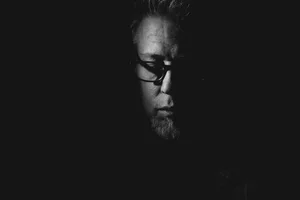
There’s very little room to move inside this series: we’re talking less than a minute of shooting and a fixed point of view; the colour remains the same, the composition as well. So all we have to work with are subtle movements—micro emotions.
The thing I miss most from shooting portraits is exactly this: how a face can change from one millisecond to the next. Not through vastly different poses, but through slight flashes behind the eyes, as if a subject’s mind is quietly speaking. Using this idea, we can re-interpret how a moment unfolds. And this is highly personal: each of us may perceive a different flow and arrive at contrasting results.
For me, there are two possibilities with these images: six frames or four frames. Let’s start with the six frames sequence:
As you can see from the annotations, I’m treating these as a film sequence: not so much individual stills, but an ongoing moment pulled away from the rest of a movie. This isn’t at all the way it happened but no one would know. In fact, to me, it feels much more linear than the original, despite the re-organization because there’s a clearer beginning and end.
However: a few of these feel redundant. Removing the six frames constraint, I’d instead choose these:
Now, each individual picture has its own personality. The FOV remains but nothing repeats. But we’ve lost the filmic quality of the sequence in the process, which came from that less “perfect” set of images. Life is filled with awkwardness, we expect it.
There’s nothing here I’d consider spectacular: just a brief interlude on a tranquil afternoon. But the same principles will apply to any story—no matter how big or how small.