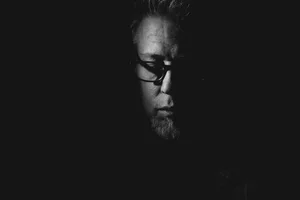
The never-constant constant
or the ever-mutating force behind our work

I received an email last week, following an online talk I’d given for Fujifilm and a local camera store. It was from a photography student struggling to find a “style”, wondering if it would be better to stick to a single type of photography, a single “look” or subject. I replied something about the importance of exploration, about whatever style eventually making itself known through the intent we bring to our craft—and how we can only learn who we are as photographers through experimentation.
But I also mentioned something that, too often, gets lost in these incessant conversations about visual identity: no matter how clear our path may one day appear, certainty is only temporary.
…
In the mid-90s, Stephen Shore did a series of projects in Israel, shooting archeological digs, all in black and white. It’s a considerable departure from the early work he’s most known for, and, quite frankly, it doesn’t speak to me at all. But in an interview, Shore explains that he’d been subscribing to archeology magazines, that he’d always wanted to visit digs, and these projects allowed him to realize that dream. In a way, it’s as if the photography was almost secondary to the experience.
But experiences feed our work, eventually. They allow us to learn and evolve—as long as we embrace new possibilities, and are willing to disregard the expectations of others.
That I like or dislike what Shore created is irrelevant. That he forged ahead, however, is a lesson worth hearing.
…
I recently attended a two-day “class” focused on planning 2022. Yes, online—obviously. I’m usually sceptical about these things, and their actual staying power, but just sitting down for a few hours, thinkingabout priorities, writing them down, scheduling anything that needed scheduling, was a tremendous help. At one point, we were asked to write a word or sentence to describe the upcoming year—something I’ve done on my own, every January. I didn’t even blink: I scribbled transform on my iPad. It may seem trite, but I don’t take that word lightly.
It’s easy to enclose ourselves inside what we already know, and to fear metamorphosis; especially when it’s happening in spite of us.
…
My journey began in a world that no longer exists. This may sound overly dramatic, but it’s a simple fact: street photography, which has been under legal assault for years, is likely to be irrevocably altered by the pandemic, and relationships to crowds, and spaces. Our family, which I’ve documented so relentlessly for so long, is also in transition, slowly bending to the normal unravellings of growing up, and moving on. It’s unsettling…but also thrilling. I now face an unknown that begs to be discovered. I could fight it. I could stubbornly resist.
I choose to accept it.
…
I hear certain questions at every conference. One of them is, “how do you decide if an image should be in black and white or colour?”. To which I always reply that—unless you made the conscious decision to shoot in JPEG-only black and white— it comes down to something you feel, or not. Something you see that suddenly makes sense, one way or the other. But in the comments, a person had a much more intriguing question on that same subject: “you have many b/w images—why?”.
It threw me off. Like someone asking a musician why they used A or D so often. Because they’re part of the musical vocabulary? Because every note and every word is at our disposal, and that’s how we speak and sing of the things we care about. Why should we limit ourselves?
Change is the never-constant constant, the ever-mutating force behind what we do. And it can only be fuelled by embracing the entire scope of the photographic language.
No fear.
No hesitation.
No regrets.