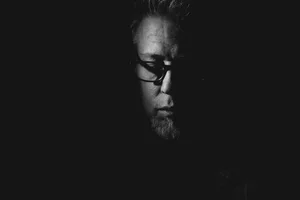
Aperture, Layers and the Wandering Eye.

OR HOW CURIOSITY THRILLED THE CAT.
In 1941, Orson Welles and cinematographer Greg Toland made extensive use of then recent advances in lighting, lenses and film stock to refine a technique dubbed Deep Focus, in which infinite depth of field would allow the viewer to not only see the action in the foreground, but to also be aware of a second or even third plane where complementary events would be unfolding. The movie, of course, was Citizen Kane.
The term masterpiece is overused, but this one fits the bill. If you’ve never seen the film, do yourself a favour and stream it: even close to a century later, it remains a masterclass in both narrative construction and visual composition. (1)


Deep Focus relied on, in part, the use of minimal apertures in order to achieve its results (2) and this is what we’ll explore in this article: the importance of aperture—small and wide—as a storytelling tool. But beyond depth of field, let’s also reflect on how we direct visual information as a whole.
The first and most important role of a visual creator is to guide the viewer’s eye within the frame—we are very much like the conductor of an orchestra. This is often interpreted as creating a single point of attention: sharp eyes in a portrait, for instance; and sure, this will always work well. But guidance can also be soft and diffused, forcing the viewer into a state of uncertainty, transforming the image into a kind of cipher. This is what the following three methods propose: creating interest through a form of obfuscation.
Dissolution
By far the most obvious way to achieve this: we use our widest possible aperture and nuke most of an image into blurry oblivion.


Left image: iso 100 1/350 s f/4 120mm (GFX 50S); Right Image: iso 160 1/640 s f/2.8 60mm (X-Pro3).
I never tire of shooting like this, even if it’s ridiculously forgiving, almost to the point of cheating. And I believe the reason behind it is actually simple: this isn’t how we see. It’s an alien point of view that exists solely within the camera, one that immediately pushes our mind into a different space. Ultimately, it introduces a puzzle to solve, which is important because at our core, we are all code-breakers—we need to decode puzzles. And as we try to decode, we search, and as we search we look.
In terms of directorial methodology it’s certainly effective—but let’s call this Level 1.
Misdirection+interference
Level 2 adds some complexity: instead of relying only on our lenses’ ability to paint visual elements away, we can force exploration through a somewhat unexpected composition:
By using misdirection.
By including interference.
My buddy Kev, Wales in the distance. X-T3 ISO 160 1/250 s f/11 35mm
In the image above the landscape is in full focus. but (to my eye at least) this is actually calling attention to the figure in the foreground. The silhouette is made more important by being treated as if it was secondary. It’s the reverse of what we would normally expect…which possibly leads to a second look.
X-T3 ISO 250 1/400 s f/9 35mm
I describe this as interference—the case could also be made for calling it “natural framing”. The out of focus figure essentially becomes negative space and forces our eye to the woman and the scenery behind her; all of which is close to tack sharp. In an idea world that sliver of a face wouldn’t be there…but street is a compromise.
The image below is a mess of interference—but it’s also what I like about it.
Multiverse
Which brings us to Level 3, the most difficult directorial method in our arsenal: multiple narratives. A diffused guidance, in my mind, isn’t necessarily just about visual blurriness: it can apply to the message itself as well. And with this, we’re now going full circle because it’s exactly what Welles and Toland did by using Deep Focus in Citizen Kane: they were managing several stories within a single frame. They were forcing the eye to wander by diffusing and multiplying the amount of information available (3).
Of course, in cinema there is the luxury of control: the stage is set, the actors follow their cues. A script exists that begins in imagination, ends in execution. Photography can be just as controlled and elaborate—Gregory Crewdson immediately comes to mind. In fact, I believe he creates his images using film gear—these are actual movie sets that simply happen to result in single frames instead of moving sequences.
Here’s an example that I’d say is textbook Deep Focus:

©Gregory Crewdson
Two subjects, two planes, two narratives. We first see the man, then the woman...and then our mind wanders and asks questions: are they estranged? Were they fighting earlier? Is this father and daughter or wife and husband? And the decor comes into play, fuelling further questions: where is this taking place? When?
Obviously, this is a meticulously conceived art project, likely storyboarded and prepared weeks and months in advance. But what about photography that exists in the furtive moment which cannot be stilled or called into action? This, for me, the chaos of it, is where the exhilaration of our work lies. It requires mechanical speed and what I’d define as holistic perception—an awareness of how an entire scene is unfolding, front to back, of the moment (or moments) where this live stage comes together as one—in spite of us.
Venice. Action!


Technically, this usually means dialling-in the “right” aperture to begin with, as soon as we see something worth shooting. And this “right” aperture will always depend on the amount of visual information we wish to include: should everything be in focus? Should some of it register less clearly? There’s a dance at work and the movements may morph from one second to the next; this is the thrill. In these instants we find ourselves racing against the frenzied pace of the world, against events moving on their infinite, unstoppable timeline. The only way to yell “cut!” is to press the shutter and hope we stopped the movie on time.
If we succeed and all layers become complementary, the richness of the image is intensified: multiple actions invite multiple interpretations. Ultimately, this promotes engagement.
Four layers on a beach in De Haan.
...
The wandering eye is, I believe, an important concept to understand. It informs everything, from composition to contrast and colour, all elements in an image pushing or pulling, vying for attention. We need to be aware of this during capture but also while we select and process our images.
There’s a lot more to write about, but it’s interesting to note that all three methods described today rely on the same underlying principle: human curiosity. People’s thirst to understand what they can’t fully grasp immediately. And photography gives us a leg up here because the still image is by definition incomplete—it contains an unreachable before and after. Mysteries. Even in the context of an essay using more than one image, there are always gaps our minds will rush to fill.
I think a viewer’s input might just be central to the impact of the message, a symbiotic relationship we should strive to nurture. Not every word must be spelled out.
……………………………….
David Fincher's MANK takes us on a wild ride regarding the actual origins of the movie’s screenplay. Turns out the debate has been ongoing for years but regardless, there’s infinitely more to Citizen Kane than the screenplay IMHO.
Which required extremely powerful lighting when filming on a soundstage.
Diffusing in the sense of making it more complex, less straightforward.