Beyond 45º

LIGHT COMES FROM EVERYWHERE.
It usually begins with a lone speedlight. Probably on-camera and aimed at the ceiling—because we’ve heard this is a way to get soft, even light that won’t look like those crappy flash-lit snapshots. Some pictures turn out ok, most still look pretty bland. So we start looking at off-camera flash and pretty quickly, we fall into the rabbit hole: triggers, light shapers etc. This octabox promises instant magic; that parabolic umbrella is a gamechanger, nothing less than a revolution in lighting. Sure.
The truth is, I’ve never seen much difference between similar modifiers, regardless of brand, other than build quality. Because light, it turns out, always behaves the same way. It doesn’t care about an Elinchrom, Profoto or Godox tag.
Light. Is. Light
In this series we’ll eventually dive deeper into the physics of light and the different options available to us. But today I just want to look at the simplest, most affordable one out there: a single flash and remote trigger, combined with distance + direction.
MIMICRY
The best way to understand light is to look at the world around us. And when we do, one aspect becomes readily apparent: it comes from many directions. We don’t walk around with a permanent 45º light source illuminating our environment: the sun moves across the sky and the horizon, casting shadows long and short, shining through obstacles, bouncing off objects; lamps, ceiling lights, street lights…all of these combine to bathe our surroundings in intricate light schemes that go well beyond an evenly lit universe.
Light can be hard or soft, but softness is not perfection—it’s just an overcast sky on a winter’s day. One option out of many.
When I was asked to give a series of studio demos for Fujifilm at Photokina 2018, I decided to explore what could be achieved by moving around a single light. Profoto were sponsoring the event so I used their A1—the smallest flash we had at our disposal—fitted with the Dome Diffuser, a small head attachment that provided a bit more control in terms of spread and spill.
But let me be clear: the principles outlined below are universal. They’ll work with a speedlight and they’ll work with massive, powered strobes. Because (all together now): light. is. light.
;)
So here are four “looks”, all done with a single flash, no soft box or umbrella.
STAGECRAFT


KEY ASPECTS

The trick here is to work with the shadows: by having the subject looking up or down we can change the mood of the scene.
The height (and consequently the distance) of the strobe will modify how the light wraps around the subject and how far down it will reach.
2. NOIR+INTERFERENCE
This is basically the opposite of what we just did: you take the light source, drop it on the ground, aim it up and boom… Kansas melts away. A light coming from below the subject immediately evokes German Expressionism or film noir—instant drama.


KEY ASPECTS

A simple wooden chair between flash and subject was used to build an additional shadow structure across the background, creating a bit more depth in the image.
With the A1’s modeling light ON, I moved the chair around the stage to place the shadows where I wanted them.
3. SUNDRENCHED


KEY ASPECTS

The one light source we all know intimately is the sun. It’s bright and it’s far, far away. So to mimic this, we need to replicate those characteristics: bright and far away.
In this studio demo I didn’t actually have the luxury of a large space (the shooting area was actually quite small), so I compensated with as much height as I could get (about 8 feet/2.5 meters?) and a steep angle—to get a 11AM-2PM sort of light.
4. LOW


KEY ASPECTS
This is a trickier look to achieve and one where that Dome Diffuser and the Profoto A1’s round head played a larger role. That’s because a round head creates a bit more falloff when compared to a traditional rectangular speedlight. Now, I don’t really use the A1 anymore: I’ll usually reach for the Godox AD200 with the round head adapter (and they have an A1 replica I believe). If you’re using a speedlight you’ll likely need to aim a bit further away and lower the power even more to get similar results.

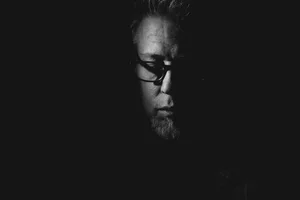
That diagram can be misleading because we can’t show depth: the flash is actually very close but aimed completely to the side of the subject, mostly away from the face. So the only light hitting him is the output from the sides of the A1. This is called feathering but in this case it’s an extreme version of it. For this to work, the light source needs to be very close, at very low power, and the angle needs to be just right. Minute adjustments will result in vastly different images—which is both an advantage and a hurdle.
But looking at these last images, I think few people would think hard light; and yet I was using a bare flash. The softness comes from power+distance+angle.