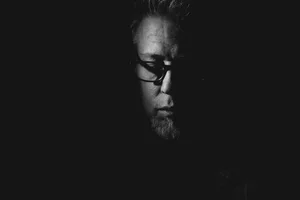
Taming the FONC
I don't wear my Apple Watch to bed anymore. I stopped in early December of last year, as an experiment, and never went back. The first few days were unnerving, as if I was experiencing a form of withdrawal from the lack of data. But those effects eventually subsided and I've since found myself, surprisingly, experiencing more restful nights. Somewhat. I still get intense dreams and I still occasionally wake up, but I no longer spend my days feeling drained and semi-conscious. Life seems sharper, more focused. Coincidence? Maybe. Or, I may have been unknowingly stressing about metrics, like a student worried about never-ending exams. With the watch, each morning would begin with an analysis of my sleeping "score": too much time in REM, not enough minutes of deep sleep, woke up too often...all of it, ironically, exhausting.
Removing the watch during sleep isn't without consequences. It immediately triggered disapproval from a couple of apps that depended on its data. Gentler Streak warned me it couldn't evaluate my "wellbeing" anymore. It was gentle about it but...did I need an app to tell me whether or not I had energy? Was I that dependent?
It turns out that years of using devices that track, and log, and record, and identify anything, anywhere, anytime can instil a panic at the thought of no longer maintaining those records. Running isn't running without a badge in the Fitness app. Events exist on a scrolling photo grid or not at all. Life needs to be a constant stream of feedback, memories, prompts and encouragements—until anything untraceable starts to escape the realm of reality.
Ultimately, if we're not careful, I think it binds us. As if life won't simply happen on its own without metrics or digital traces. As if experiences require an auxiliary ecosystem to be validated. Over the past several months I've taken to giving this "affliction" a name: FONC—the Fear Of Not Capturing.
FONC is a derivative of FOMO, but with an actionable twist thrown in. It's the hoarder reflex for digital assets: notes, links, badges, streaks. But also for any form of "documenting"—and yes, as much as it pains me to admit this, picture-taking.
“I look at the world without the pulsing desire to devour it at all costs. That’s a dramatic evolution: I can contemplate without absorbing. Allow images to pass. ”
I'm aware of the irony: a photographer advocating against capturing is a little like a surfer deciding to avoid the ocean. I still believe what I've always claimed: that how we photograph impacts our connection to the moment. That a camera isn't necessarily an anti-social wall: if we infuse it with enough intent it becomes an attention machine, one that forces us to notice what we'd typically dismiss, or barely reward with an errant glance. But it can get obsessive, and the beauty of the photographic instinct is that it eventually holds the power of transcending the device. The camera, through every frame we capture and with each split-second decision we make about instant, light, movement, colour and shadow, is a teacher. As a craft, photography transforms our relationship to the world in ways that can be much broader than the simple curation of snapshots. When we photograph we aren't just learning to see through the lens: we're learning to see, period.
I still take pictures, all the time in fact. After years of near compulsive behaviour, grabbing the camera whenever I could, I'm incapable of decoupling reality from the potential of images. I rarely look at anything without mentally re-framing it. But the difference, now, is that I don't always press a shutter anymore. Sometimes, I'll even force myself not to, and those images become secrets. They flow into the vast undercurrent of memories, disembodied and thinning until they settle into layers and layers of sediment. I do this to accept life as a moveable feast, ultimately out of bounds and impossible to ever grasp in its entirety.
Moments will always pass and moments will always follow.
I've always had a fraught relationship with time. I've written about it often, too many words to count. I can see the end in everything and everyone and it's overwhelming at times. My photographic record is like an imprint of my voice screaming stop! Over and over again. For the longest time not capturing meant betraying worlds, allowing them to slip away, as if they didn't matter. Of course they matter. Each one matters. But each one will slip away. No amount of fear and guilt or accumulation of frames can change that.
So I'm learning to trust in the multiplicity of images, and accepting those destined to sink to the ocean floor. I'm learning to discard data points, and to listen to my own voice instead.
Sometimes, I even take walks with Watson and don't wear my watch.
Imagine that.