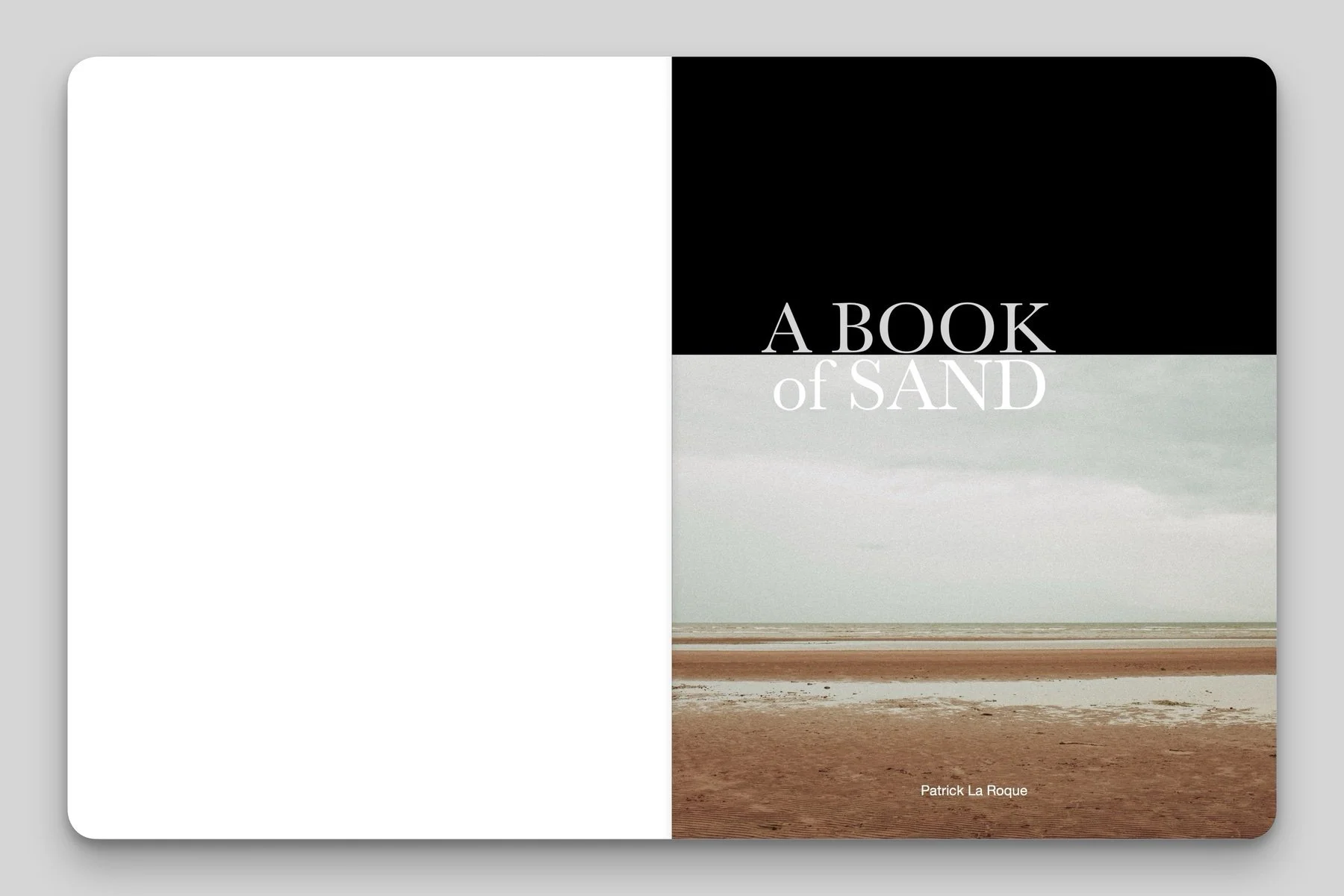
A Book of Sand
“...for a number of months now I have thought of you as being a little lost.”
Yes, I was. I am. But that's fine.
I used to believe existence was about accumulation—but not in the shallow, consumerist meaning we usually ascribe to it. Something positive: an accumulation of relationships, of knowledge, of wisdom. Life was a sum operator. But the arc of any story inevitably moves from apex to nadir—and I now notice the downward, subtractive slope of our universe. A curvature that bends particles ever so slightly, compresses time as if every heartbeat exists simultaneously on a single plane.

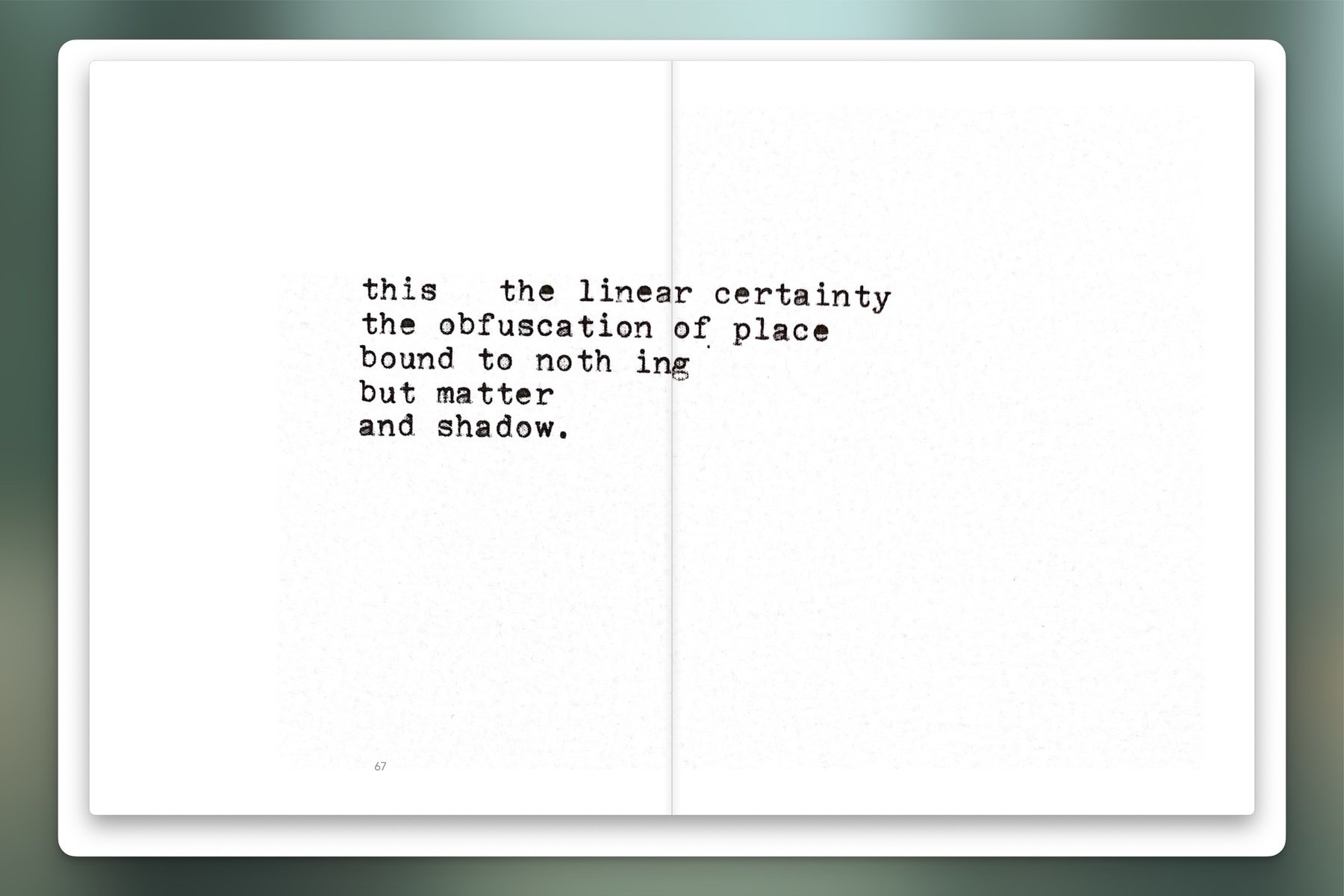
A Book of Sand is a collection of thoughts and images, but it isn't a "document", and it's certainly not an anthology. It contains too much ambiguity and imprecision. The narrative—if there is one—flows along a dream-sequence principle that betrays the glazing over of these older eyes as I now look at the past, or present, for that matter. Nothing ever truly settles, even in words, many of them typed in a frenzy and pasted-in from their original torn-up sheets of paper. No corrections. No attempt at translation.
This is a vortex. Any blurriness or obfuscation is, in fact, necessary.
In the end the selection spans eleven years of our lives, something that wasn't in any way intentional and yet...of course. The timeline is self-evident, coinciding with the compulsory nature of my photography after embracing the X-series cameras. Coinciding with the path our family took as well—the two forever intertwined.
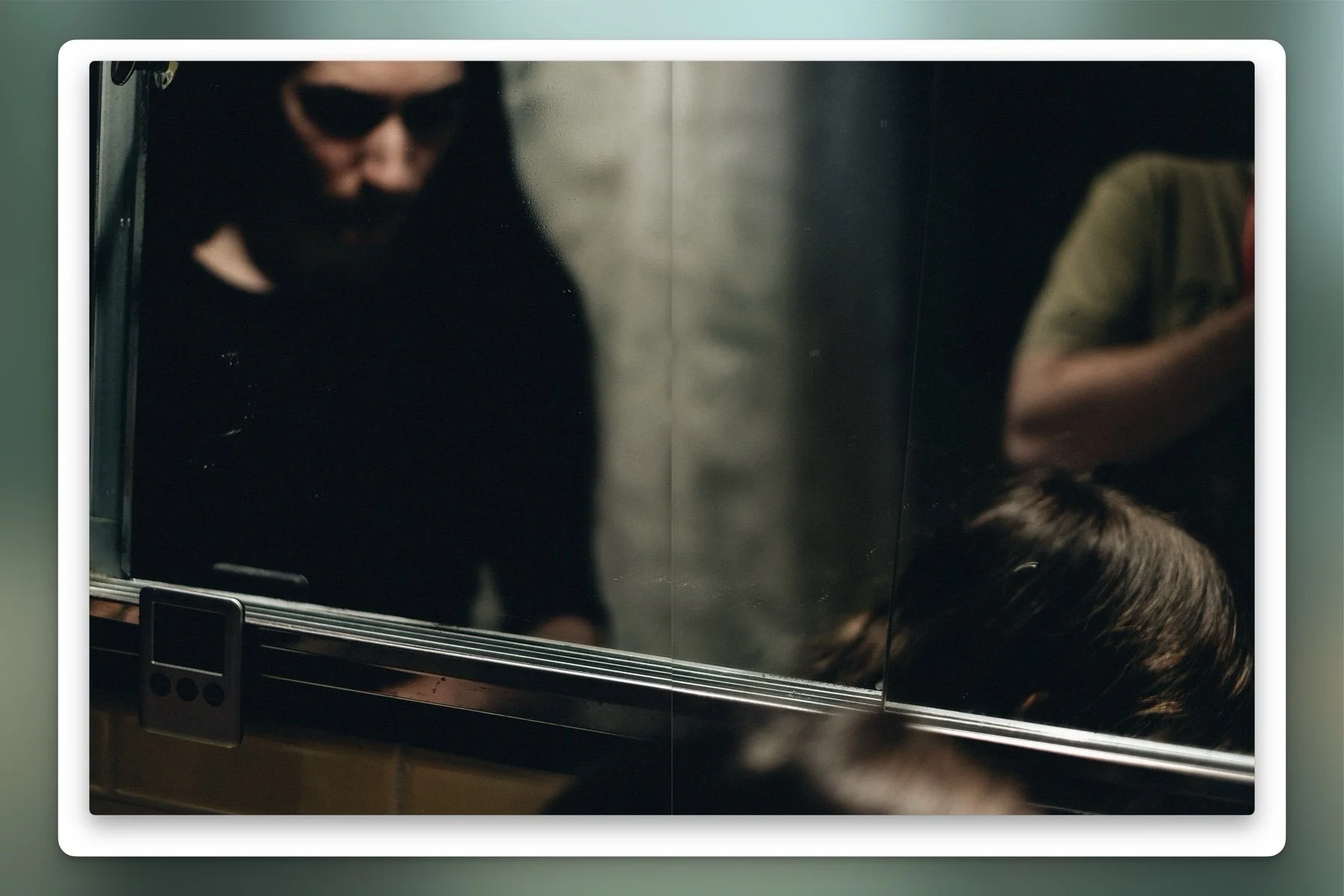
Unlike what I've shared on this blog through the years, the images in A Book of Sand omit clarity at all costs—in both movement and stillness—of Cynthia, the kids, and myself. Again, it's a choice that presented itself organically. But while a more or less subconscious awareness of privacy certainly played its part in this, there's also a tacit acknowledgement of what Sally Mann so eloquently describes as photography's corruption of memory:
What Zola perhaps also knew or intuited was that once photographed, whatever you had "really seen" would never be seen by the eye of memory again. It would forever be cut from the continuum of being, a mere sliver, a slight, translucent paring from the fat life of time; elegiac, one-dimensional, immediately assuming the amber quality of nostalgia: an instantaneous memento mori. Photography would seem to preserve our past and make it invulnerable to the distortions of repeated memorial superimpositions, but I think that is a fallacy: photographs supplant and corrupt the past, all the while creating their own memories.
Without clarity the message lives on as an open question, a loop that never fully closes, our memory free to wander amongst the interstices of the selected moments. What remains is merely impression. Like footprints, triggering some vague recollection of transit.
We were here.
We existed.


On the technical side: a decade of images also means a decade of cameras. I think it's a testament to the Fujifilm ecosystem that nothing ever felt out of place, visually. I chose pictures solely from an emotional standpoint and never second-guessed the gear I'd shot them with. It all gelled, somehow. A few images were reprocessed from the originals once I got nearer to a final selection, but nothing was ever dramatically altered. The workflow was similar to coalescing the tones of a sequence within a single post, or essay.
The book includes an index that lists the camera model and year for each photograph—because the geek in me couldn't resist. I added this as the very last step and found the scope of the results interesting: it's a variety that doesn't always reflect the importance of any particular camera body in my journey. The original X100 isn't even included, for instance. This highlights how little the technology mattered to the selection process: it was all instinct, for better or worse. It's also human, I think, to favour more recent work, even when choosing images from our past. It's a bias borne of that urge to move forward and re-invent ourselves, to refuse any notion of settlement, or conclusion.
In other words, everything about this work was an impulse.
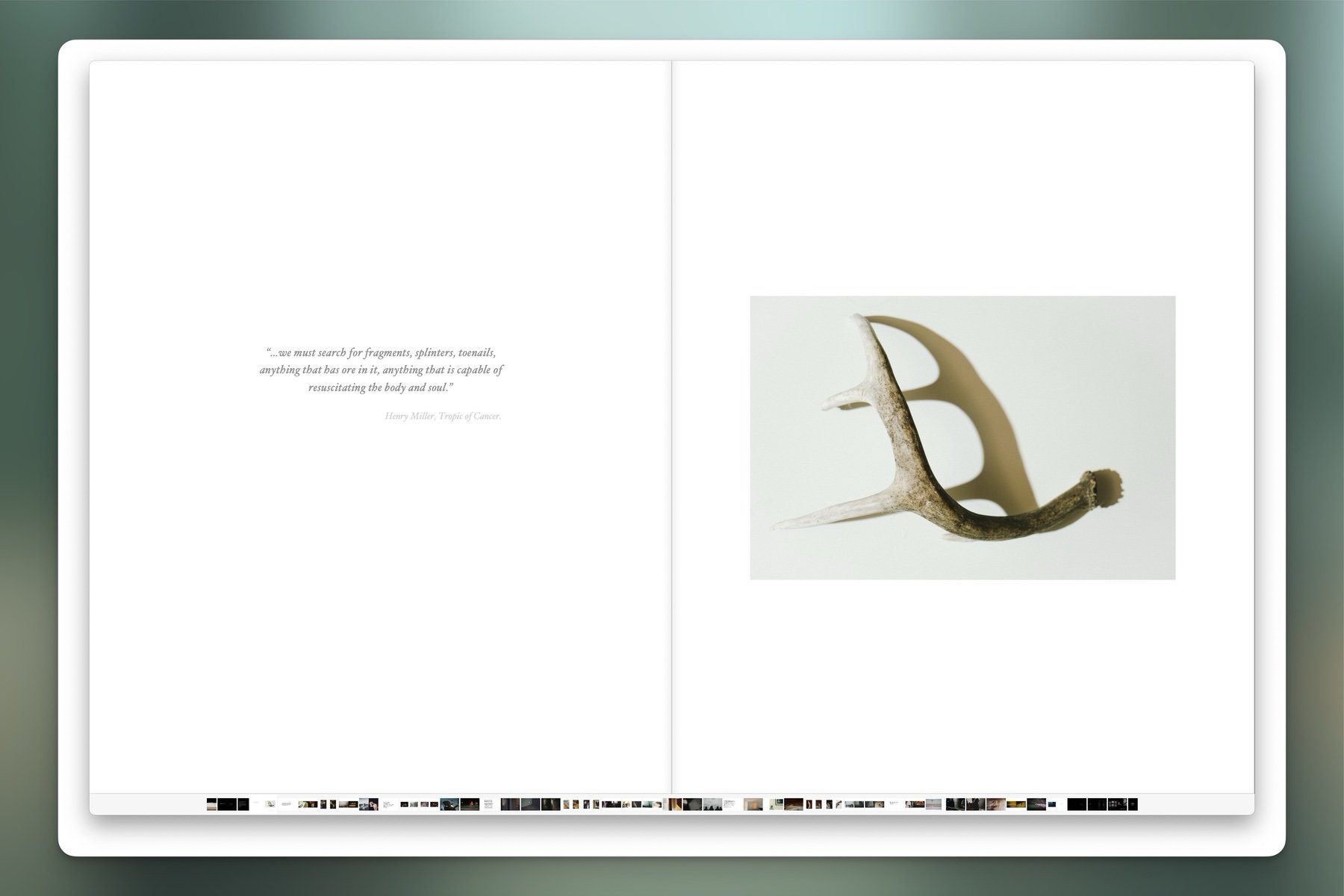
In a 2001 interview, Leonard Cohen speaks of a recent epiphany:
'There was just a certain sweetness to daily life that began asserting itself. I remember sitting in the corner of my kitchen, which has a window overlooking the street. I saw the sunlight that shines on the chrome fenders of the cars, and thought, "Gee, that's pretty."
The nature of our craft can easily leave us drowning under the sheer quantity of stilled moments we collect, as we're constantly swallowed by the impulse to capture. But while I still do feel a little lost, a little rudderless, I now understand this is due to the slow shift away from my life's constant struggle with urgency, and towards accepting a more contemplative, perhaps even passive state.
A Book of Sand is my window, overlooking the street.
Sunlight that shines on the chrome fenders of cars.
Fleetingly.
The book is available today.
Hope you enjoy this :)