Make it Darker
I’d known about W. Eugene Smith’s Jazz Loft project for years—it’s the sort of seminal work you constantly run across when reading about photography. It’s usually accompanied by that iconic portrait of Thelonious Monk, cigarette dangling from his mouth as wisps of smoke rise, like so many blue notes, dancing and airborne.
But I never knew the backstory or the context of this monumental undertaking until I watched Sara Fishko’s brilliant documentary THE JAZZ LOFT ACCORDING TO W. EUGENE SMITH . It’s an absolutely fascinating dive into the obsessive nature of an artist’s quest for perfection. Actually not just perfection but completeness—which is of course impossible to ever truly achieve. As I mentioned in an earlier post, the movie is streaming on Prime Video right now but it’s also available through other on-demand services if you’re interested (they’re all listed if you follow the link). I can’t recommend it enough.
Today I want to look at a specific aspect of Smith’s work that I believe we can all relate to: post-processing.
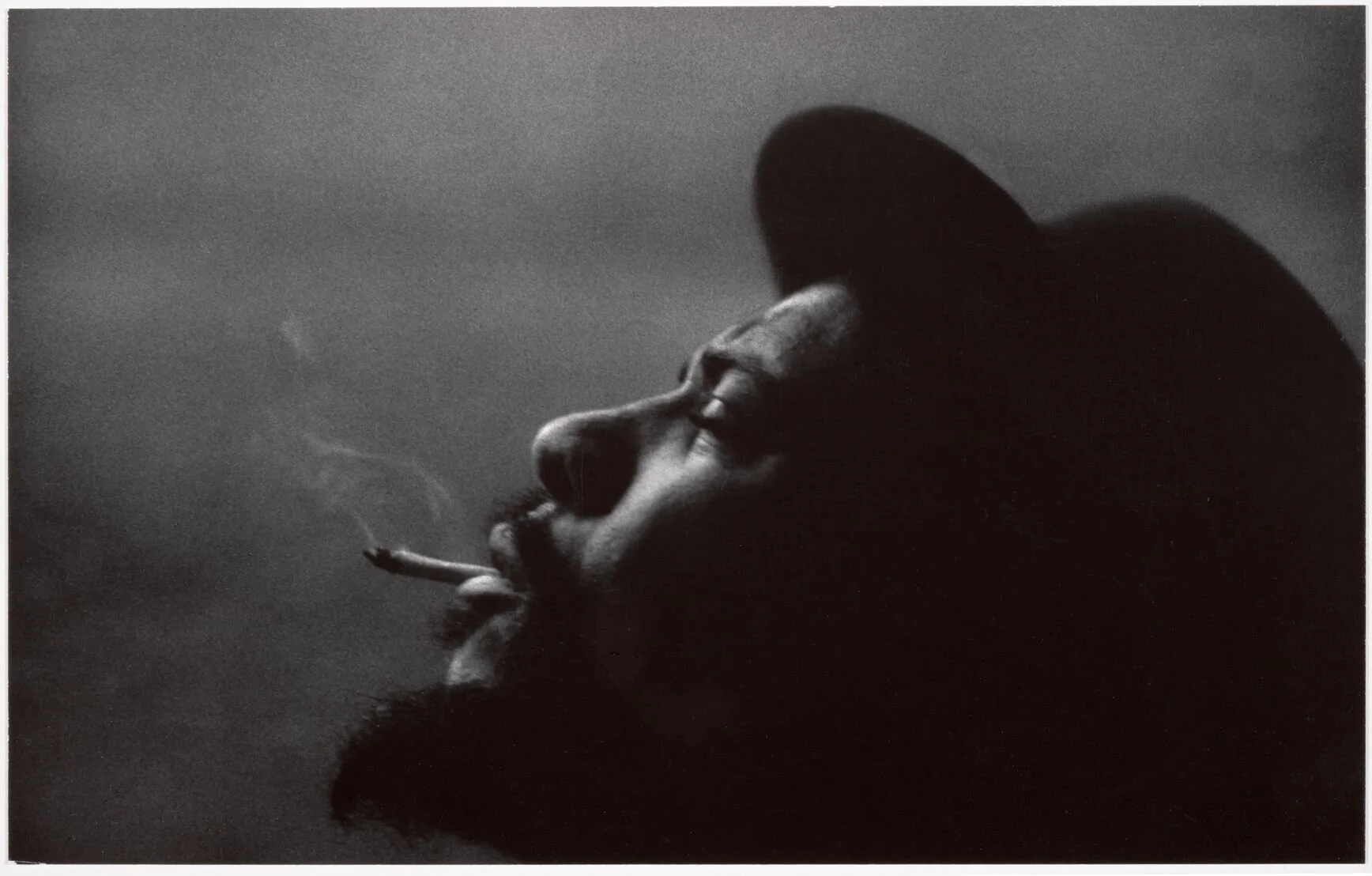
Thelonious Monk by W. Eugene Smith, 1959
“At least fifty percent of the image is done in the darkroom—I think Gene would say ninety percent. The negative has the image, but it can’t produce the image completely, as the photographer saw it—not as Gene saw it.”
Ahh...the good old days of film photography, when all you had to do was click the shutter (insert sarcasm emoji). The above quote is from photographer James Karales (from a very interesting 2013 article by Sam Stephenson in The Paris Review). Famous for his stunning coverage of the Civil Rights Movement at Look magazine in the 1960s, Karales first found work as Smith’s darkroom assistant, fresh out of college. He goes on:
“Gene always liked to get separations around people, figures, and that was always done with potassium ferrocyanide. It was the contrast that made the prints difficult. Gene saw the contrast with his eyes, but the negative wouldn’t capture it the same way. So he would have to bring the lamp down and burn, and then if that spilled too much exposure and made it too dark, you would lighten it with the ferrocyanide.”
This technique is also described in the movie, and it immediately caught my ear because it happens to be how I approach most images: by first pulling as opposed to pushing.
PULLING
Everything around us seems to always be about “pop”, about intense brightness and saturation. Walk into an electronics store and every single screen is likely to give you a sunburn. Our phones’ vaunted AI/machine learning algorithms tend to mostly dial towards 11. Which makes sense because studies have shown the human brain reacts positively to brightness and saturation. And excitement sells, literally.
But...I like muted. I drop the brightness of every screen I own. I gravitate towards underexposed imagery 8 out of 10 times. And I’ve always loved W. Eugene Smith’s photography precisely because of this permeating aura of darkness. His pictures are never about seeing everything—they’re about seeing what is important. I think there’s a lesson there.
Here’s an example, using an image I shot over the weekend. In the version below, I used Pixelmator Photo’s global ML function (machine learning). To be clear: we can choose NOT to use this. The app doesn’t force it, it’s merely an option. But I wanted to see how the AI would interpret the scene:
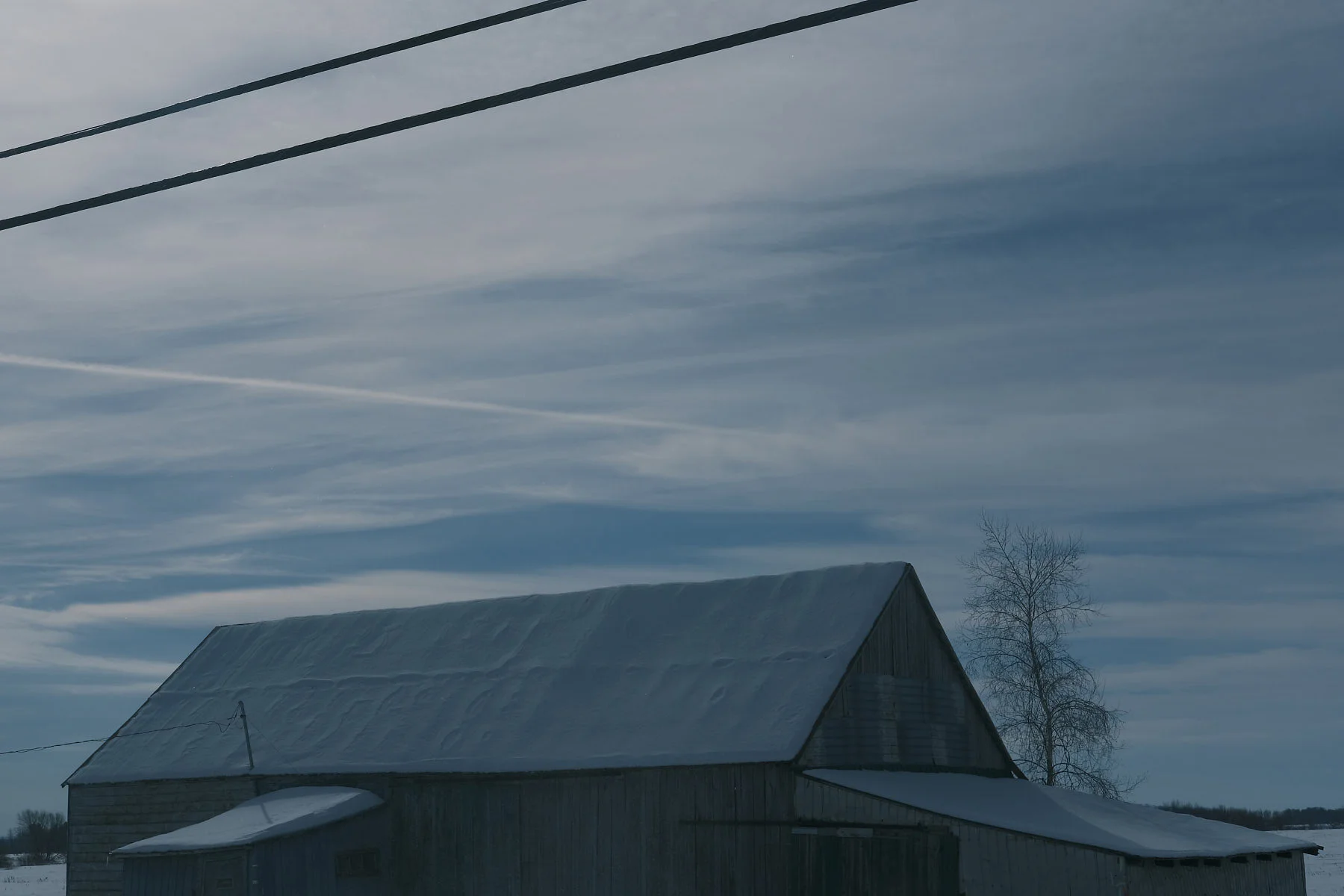
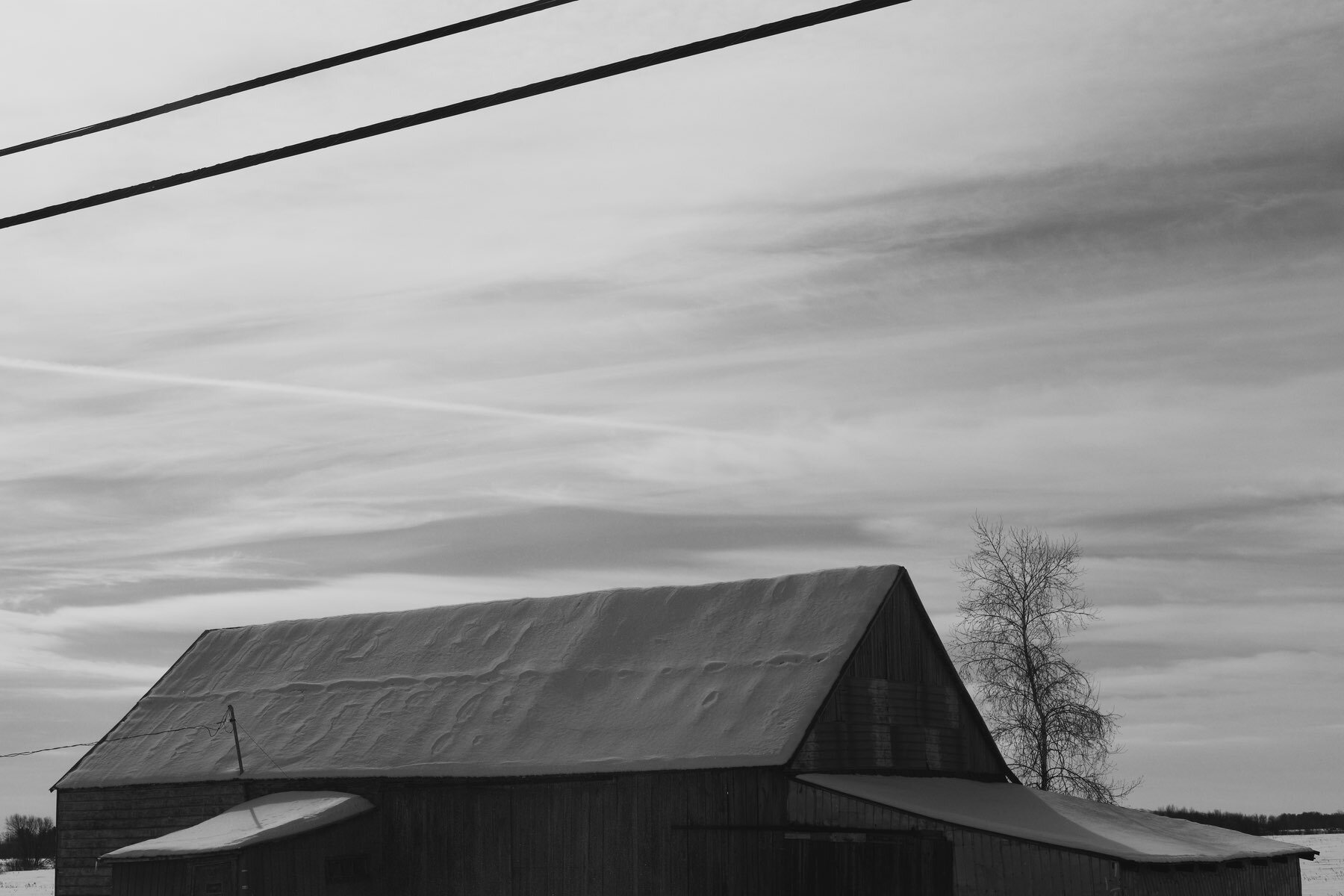
SOOC image on the left, processed on the right. Sure enough, ML pushed the overall brightness. Nothing crazy and there’s nothing wrong with it...except it‘s not what I had in mind when I captured the image. If you look at the original file it’s slightly underexposed, which is closer to the goal. What I was after wasn’t the detail in the barn or the fields in the background: it was all about the clouds, the power lines and the overall shape of that barn. The direction of the light as well. So my interpretation in Capture One is this:
I’m sure some will prefer the ML version, but to me it says nothing. It’s a barn in winter.
If you’re curious about the technical details: this is a JPEG file (X-Pro3), shot through the window of a moving car (I was not driving), and part of the process consisted of dropping the overall brightness before bringing a few elements back up. Nothing overly complex, just a slight push on highlights in the sky and the snow (linear gradient + brush).
Here’s another one from the same drive (only one version this time):
Again:
Dropped global brightness
Brought back specific elements (in this case the mirror).
Digital potassium ferrocyanide.
…
W. Eugene Smith is a photographer whose body of work I constantly point to during photography talks, usually to establish where our modern visual language first originated—and how we are mainly refining words uttered long, long ago.
Now...where’s my tape recorder?
Later